
Types of Gravel and Sand: Production Methods and Uses
Presented by Amindus Consulting and Solutions
The quality of gravel and sand plays a crucial role in construction and landscaping projects. Behind every high-quality aggregate product lies a series of carefully managed processes: crushing, screening, and washing. These steps transform raw materials into usable products that meet specific standards for strength, size, and cleanliness.
This post explores each process in detail, explains their importance, and highlights the types of gravel and sand produced along with their common uses.
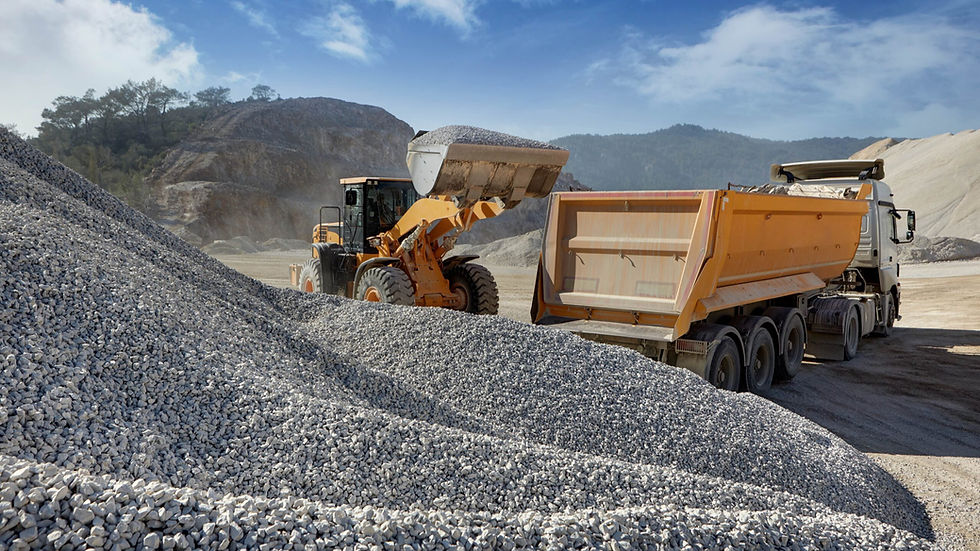
Crushing: Breaking Down Raw Materials
Crushing is the first step in the aggregate production process. It involves breaking large rocks or stones into smaller, manageable pieces. This process is essential because raw materials extracted from quarries or riverbeds are often too large or irregular for direct use.
How Crushing Works
Crushing uses mechanical force to reduce the size of rocks. There are several types of crushers, each suited for different materials and output sizes:
Jaw Crushers: Use compressive force with two jaws, one fixed and one moving, to break rocks. Ideal for primary crushing of large stones.
Cone Crushers: Use a rotating cone inside a fixed outer shell to crush materials. Suitable for secondary or tertiary crushing.
Impact Crushers: Use impact force to break rocks by striking them with hammers or blow bars. Good for softer materials.
The choice of crusher depends on the hardness of the rock, desired size, and production capacity.
Importance of Crushing
Size Reduction: Crushing reduces rock size to a uniform range, making it easier to handle and process further.
Shape Improvement: Proper crushing improves the shape of aggregates, which affects the strength and stability of concrete and asphalt.
Preparation for Screening: Crushing prepares materials for the next step by creating particles that can be sorted by size.
Screening: Sorting Aggregates by Size
After crushing, the material moves to screening. Screening separates crushed rock into different size categories. This step ensures that the final product meets specific size requirements for various applications.
Screening Methods
Screening uses vibrating screens or rotary screens with different mesh sizes to sort materials. The screens shake or rotate, allowing smaller particles to pass through while larger ones remain on top.
Vibrating Screens: Common in aggregate plants, these screens use vibration to move material across the screen surface.
Rotary Screens: Cylindrical screens that rotate to separate particles by size.
Why Screening Matters
Quality Control: Screening ensures aggregates meet size specifications, which is critical for structural integrity in construction.
Product Variety: Different projects require different aggregate sizes, from fine sand to coarse gravel.
Efficiency: Proper screening reduces waste and improves the efficiency of subsequent washing and handling.
Washing: Removing Impurities for Clean Aggregates
Washing removes dirt, clay, silt, and other impurities from crushed and screened aggregates. Clean aggregates improve the bonding properties of concrete and asphalt and prevent problems like staining or reduced strength.
Washing Techniques
Log Washers: Use rotating shafts with paddles to scrub aggregates.
Wheel Washers: Use water sprays and rotating wheels to clean materials.
Hydrocyclones: Use centrifugal force to separate fine particles from water.
Water is a key component in washing, and many plants recycle wash water to reduce environmental impact.
Benefits of Washing
Improved Strength: Clean aggregates bond better with cement or asphalt.
Enhanced Appearance: Washed aggregates have a brighter, more uniform look, important for decorative landscaping.
Reduced Contamination: Washing removes harmful materials that could weaken structures or cause environmental issues.
Types of Gravel and Sand and Their Production Methods
The aggregate industry produces a variety of gravel and sand types, each suited for specific uses.
Gravel Types
Pea Gravel: Small, rounded stones about 1/8 to 3/8 inch in size. Produced by crushing and screening river rock or quarry stone. Used in landscaping, walkways, and drainage.
Crushed Stone: Angular stones produced by crushing larger rocks. Sizes vary from fine dust to large stones. Common in concrete production, road base, and railroad ballast.
Bank Gravel: Naturally occurring gravel with a mix of sand, clay, and stones. Often washed and screened before use in construction.
Sand Types
Concrete Sand: Coarse sand with angular particles, produced by crushing and screening. Used in concrete mixes and asphalt.
Masonry Sand: Fine, smooth sand used in mortar and plaster.
Pit Sand: Naturally occurring sand from riverbeds or pits, often washed to remove impurities. Used in construction and landscaping.
Common Uses of Gravel and Sand in Construction and Landscaping
Concrete Production: Crushed stone and concrete sand provide strength and stability.
Road Construction: Gravel forms the base layers, while sand is used in asphalt mixes.
Drainage Systems: Pea gravel and washed gravel allow water flow while preventing soil erosion.
Landscaping: Decorative gravel and sand enhance garden paths, patios, and water features.
Railroad Ballast: Crushed stone supports railroad tracks and facilitates drainage.


Comments