
How to Estimate ROI for a Sand and Gravel Production Plant
Presented by Amindus Consulting and Solutions
Setting up a crushing and screening plant for sand and gravel production involves more than just purchasing equipment and starting operations. Many industry professionals focus on the upfront capital costs but overlook several hidden expenses that can significantly affect profitability. Understanding these hidden costs is essential for accurately estimating the return on investment (ROI) and making informed decisions.
This post explores common overlooked expenses such as equipment maintenance, labor, and site preparation. It also offers practical tips and examples to help you calculate ROI more precisely for your sand and gravel production plant.
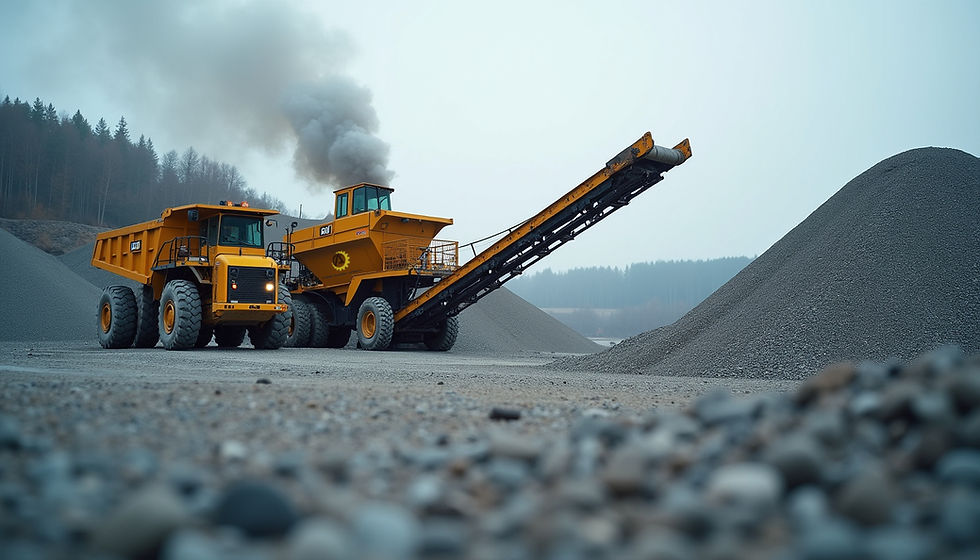
Crushing and screening plant setup with visible machinery and raw material piles
Common Overlooked Expenses in Plant Setup
Equipment Maintenance and Repairs
Many operators underestimate the ongoing costs of maintaining crushing and screening equipment. Maintenance includes routine inspections, replacement of wear parts like crusher liners and screen meshes, lubrication, and unexpected repairs.
Wear parts replacement can cost 10-15% of the equipment’s purchase price annually.
Downtime due to maintenance can reduce production capacity, impacting revenue.
Preventive maintenance programs require skilled technicians and spare parts inventory.
For example, a jaw crusher costing $150,000 may require $15,000 to $22,500 annually for wear parts and maintenance. Ignoring these costs can lead to budget overruns and reduced plant availability.
Labor Costs Beyond Operators
Labor expenses extend beyond just machine operators. Consider:
Supervisors and maintenance staff to ensure smooth operations.
Training costs for new hires or upskilling existing workers.
Shift differentials if operating 24/7.
Safety personnel to comply with regulations.
A medium-sized plant might employ 10-15 workers, with an average annual labor cost of $40,000 per employee including benefits. This can add up to $400,000-$600,000 yearly, a significant operational expense often underestimated during planning.
Site Preparation and Infrastructure
Site preparation involves more than clearing land. Hidden costs include:
Ground leveling and grading to ensure stable equipment placement.
Drainage systems to prevent flooding and erosion.
Access roads for heavy machinery and transport trucks.
Utilities installation such as power supply, water, and communication lines.
Environmental compliance costs like dust control and noise barriers.
For example, preparing a 10-acre site might cost $100,000 to $300,000 depending on terrain and local regulations. Skipping thorough site preparation can cause delays and increase long-term maintenance costs.
Permitting and Regulatory Compliance
Obtaining permits and meeting environmental regulations can involve fees and additional investments:
Environmental impact assessments
Noise and dust mitigation measures
Waste disposal systems
These costs vary by location but can add tens of thousands of dollars to the initial budget.
Tips for Accurate ROI Estimation for a Sand and Gravel Production Plant
Include All Operational Costs
When calculating ROI, include:
Capital expenditure (equipment, site prep, infrastructure)
Operating expenses (labor, maintenance, utilities)
Indirect costs (insurance, permits, environmental compliance)
Use Realistic Production Estimates
Estimate production capacity based on equipment specifications and site conditions. Factor in downtime for maintenance and unexpected breakdowns.
For example, if a plant’s crusher can process 200 tons per hour, but downtime reduces effective operation to 180 tons per hour, use the lower figure for revenue calculations.
Calculate Revenue Based on Market Prices
Use current market prices for sand and gravel but consider seasonal fluctuations. For instance, if the average price is $10 per ton, and the plant produces 180 tons per hour operating 8 hours a day for 300 days, annual revenue would be:
180 tons/hour × 8 hours/day × 300 days × $10/ton = $4,320,000
Factor in Depreciation and Financing Costs
Include depreciation of equipment over its useful life and interest on loans if financing is used. This affects net profit and ROI.
Practical Example of ROI Calculation
Assume a sand and gravel plant with the following:
| Item | Cost/Value
| Equipment purchase | $1,000,000 |
| Site preparation | $200,000 |
| Annual maintenance | $120,000 |
| Annual labor | $500,000 |
| Operating days per year | 300 |
| Production capacity | 180 tons/hour |
| Operating hours per day | 8 |
| Product price | $10 per ton |
| Depreciation period | 10 years |
| Loan interest | 6% per annum |
Step 1: Calculate annual revenue
180 tons/hour × 8 hours/day × 300 days × $10/ton = $4,320,000
Step 2: Calculate annual operating costs
Maintenance + Labor = $120,000 + $500,000 = $620,000
Step 3: Calculate annual depreciation
($1,000,000 + $200,000) / 10 years = $120,000
Step 4: Calculate annual loan interest
Assuming full loan on equipment and site prep:
$1,200,000 × 6% = $72,000
Step 5: Estimate annual profit before tax
Revenue - Operating costs - Depreciation - Interest
= $4,320,000 - $620,000 - $120,000 - $72,000
= $3,508,000
Step 6: Calculate ROI
ROI = (Annual profit / Total investment) × 100
= ($3,508,000 / $1,200,000) × 100 ≈ 292%
This simplified example shows a strong ROI but depends heavily on accurate cost and production estimates. Overlooking maintenance or labor costs would inflate ROI unrealistically.
Strategies to Manage Hidden Costs
Implement preventive maintenance to reduce unexpected breakdowns.
Train staff thoroughly to improve efficiency and reduce accidents.
Plan site preparation carefully to avoid costly delays.
Monitor market prices regularly to adjust production or pricing strategies.
Use financial software to track expenses and revenues in real time.


Comments