
How Batteries Are Made: Processes, Types & Uses
Presented by Amindus Consulting and Solutions
Batteries power much of modern life, from smartphones to electric vehicles. Yet, few people understand how these energy storage devices are made or what materials go into them. This post explores the science behind battery production, covering the basics of how batteries work, the raw materials involved, the manufacturing steps, different battery types, their uses, and what the future holds for this vital technology.
How Batteries Work: The Basics
At its core, a battery stores chemical energy and converts it into electrical energy when needed. This process involves three main components:
Anode: The negative electrode where oxidation occurs, releasing electrons.
Cathode: The positive electrode where reduction happens, accepting electrons.
Electrolyte: A medium that allows ions to move between the anode and cathode, completing the circuit internally.
When a battery powers a device, electrons flow from the anode through the external circuit to the cathode, while ions move through the electrolyte inside the battery. This flow of electrons generates the electric current that powers devices.
Energy storage capacity depends on the materials used and the battery’s design. The interaction between electrodes and electrolyte determines voltage, capacity, and cycle life.
Key Raw Materials in Battery Production
Several raw materials are essential for making different types of batteries:
Lithium: A lightweight metal used mainly in lithium-ion batteries for its high energy density.
Lead: Used in traditional lead-acid batteries, common in automotive starters and backup power.
Nickel: Found in nickel-metal hydride (NiMH) and nickel-cadmium (NiCd) batteries, offering good energy and power.
Cobalt: Often combined with lithium in cathodes to improve stability and capacity.
Graphite: The most common anode material in lithium-ion batteries due to its excellent conductivity and stability.
Each material has unique properties that influence battery performance, cost, and safety.
Step-by-Step Battery Manufacturing Process
Battery production involves several precise steps to ensure quality and safety:
1. Electrode Preparation
Mixing: Active materials like lithium cobalt oxide or lead dioxide are mixed with binders and conductive additives.
Coating: The mixture is coated onto metal foils (aluminum for cathodes, copper for anodes).
Drying and Calendaring: The coated foils are dried and compressed to achieve the right thickness and density.
2. Cell Assembly
Cutting: Electrodes are cut into specific shapes.
Stacking or Winding: Electrodes and separators are stacked or rolled to form the cell structure.
Housing: The assembled cells are placed into metal or plastic cases.
3. Electrolyte Filling
The electrolyte solution is injected into the cell to enable ion movement.
4. Forming
The battery undergoes initial charging and discharging cycles to activate the electrodes and stabilize performance.
5. Testing and Quality Control
Batteries are tested for capacity, voltage, internal resistance, and safety features before packaging.
This process varies slightly depending on battery type but follows similar principles.
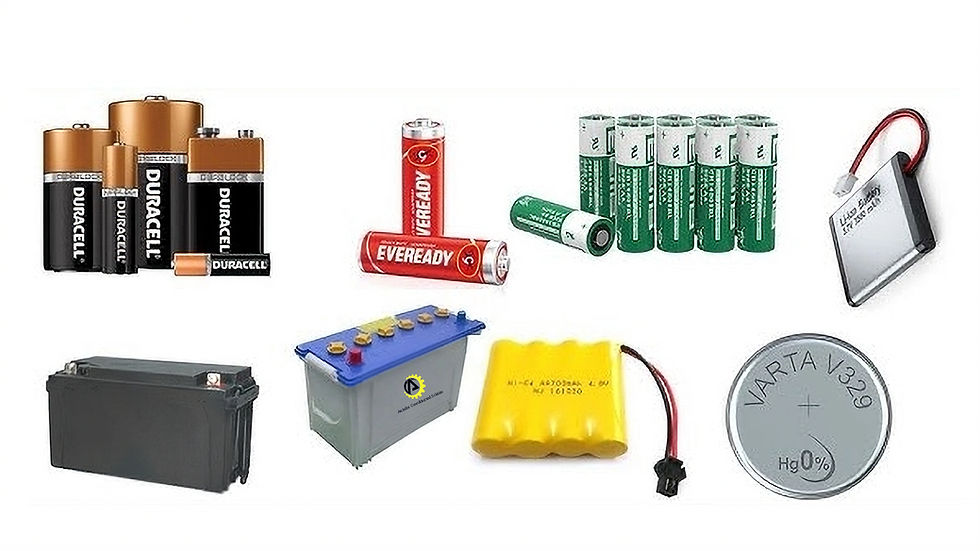
Different Types of Batteries and Their Uses
Batteries come in many forms, each suited to specific applications:
Lead-Acid Batteries
Widely used in cars and backup power systems. They are heavy but inexpensive and reliable.
Lithium-Ion Batteries
Common in portable electronics and electric vehicles. They offer high energy density and long cycle life.
Lithium Iron Phosphate (LFP) Batteries
A subtype of lithium-ion with improved safety and longer life, popular in electric buses and stationary storage.
Nickel-Metal Hydride (NiMH) Batteries
Used in hybrid vehicles and some consumer electronics. They provide good power and moderate energy density.
Nickel-Cadmium (NiCd) Batteries
Known for durability and performance in extreme temperatures but less common due to toxicity concerns.
Solid-State Batteries
An emerging technology replacing liquid electrolytes with solid ones, promising higher safety and energy density.
Each battery type balances factors like cost, energy, power, and safety differently.
Industrial and Commercial Applications
Batteries play a crucial role across many sectors:
Automotive
Electric and hybrid vehicles rely heavily on lithium-ion and LFP batteries for propulsion.
Solar Energy
Batteries store solar power for use when sunlight is unavailable, enabling off-grid and grid-tied systems.
Telecommunications
Backup batteries ensure continuous operation of communication networks during power outages.
Industry
Batteries power tools, robotics, and backup systems in manufacturing and logistics.
The choice of battery depends on the specific energy and power needs of each application.
Choosing the Right Battery
Selecting a battery requires considering several criteria:
Capacity: How much energy the battery can store.
Voltage: The electrical potential the battery provides.
Cycle Life: Number of charge-discharge cycles before capacity degrades.
Safety: Resistance to overheating, leakage, or explosion.
Cost: Initial price and total cost of ownership.
For example, electric vehicles prioritize high capacity and cycle life, while backup systems focus on safety and cost.
Safety and Recycling Challenges
Battery safety is critical due to risks of overheating, fire, or chemical leaks. Manufacturers design protective circuits and use safer chemistries like LFP to reduce hazards.
Recycling batteries is complex because of hazardous materials and the need to recover valuable metals like lithium and cobalt. Efficient recycling reduces environmental impact and supply risks but requires advanced technology and infrastructure.
Future Trends in Battery Technology
The battery market is evolving rapidly with several promising trends:
Solid-State Batteries: Offering higher energy density and safety, they could transform electric vehicles and portable devices.
Sustainable Materials: Research focuses on reducing cobalt use and finding alternatives to lithium.
Faster Charging: New chemistries and designs aim to cut charging times dramatically.
Second-Life Batteries: Reusing batteries from electric vehicles for stationary storage extends their usefulness.
Improved Recycling: Innovations aim to make recycling more efficient and cost-effective.
These advances will shape how batteries power the future.


Comments