
Inside the Spaghetti and Macaroni Manufacturing Process and the Machines Used at Each Stage
Presented by Amindus Consulting and Solutions
Spaghetti and macaroni are staple pasta products enjoyed worldwide. Behind their familiar shapes lies a detailed industrial process designed to ensure consistent quality and taste. This post walks through each stage of manufacturing these pasta types, highlighting the key machines involved and critical parameters that affect the final product. Whether you are a food industry professional, investor, student, or project developer, this guide offers practical insights into pasta production.
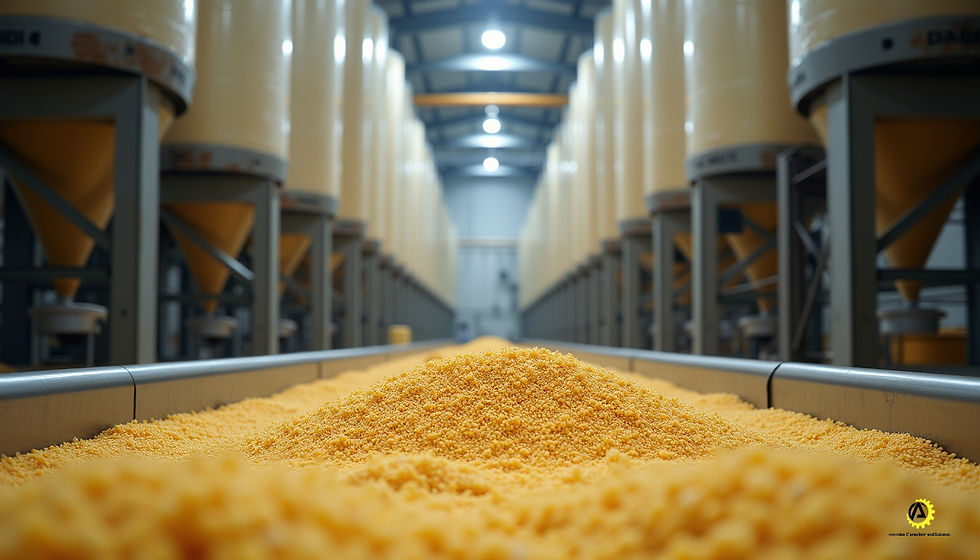
Semolina Reception and Storage
The journey begins with semolina, the coarse durum wheat flour that forms the base of spaghetti and macaroni. Semolina arrives at the factory in bulk and is unloaded into large silos. These silos are designed to protect the raw material from moisture and contamination.
Machines used: Semolina silos equipped with aeration and temperature control systems.
Key parameters: Maintaining low humidity (below 14%) and stable temperature (around 20°C) to preserve semolina quality.
Proper storage prevents spoilage and ensures the semolina is ready for precise dosing in the next step.
Dosing and Mixing
After storage, semolina is transferred to dosing systems that measure exact quantities for each production batch. Water is added during this phase to form the dough.
Machines used: Automated dosing units, industrial mixers.
Process details: Water content typically ranges from 28% to 32%, depending on the pasta type.
Critical parameters: Accurate dosing ensures consistent dough texture; mixing time and speed affect dough homogeneity.
Mixers blend semolina and water into a uniform dough, which is essential for extrusion quality.
Extrusion and Shaping
The dough moves to the extrusion stage, where it is forced through shaped dies to form spaghetti or macaroni.
Machines used: Extruders with stainless steel screws and interchangeable dies.
Dies: Different dies produce various pasta shapes; spaghetti dies create long, thin strands, while macaroni dies form hollow tubes.
Key parameters: Extrusion pressure, dough temperature (usually 40-45°C), and screw speed influence pasta texture and surface finish.
Extrusion machines must maintain steady pressure to avoid air bubbles and ensure smooth pasta surfaces.

Cutting
Once extruded, the pasta strands or tubes are cut to the desired length.
Machines used: Rotary or guillotine cutters synchronized with extrusion speed.
Cutting length: Spaghetti is typically cut to 25-30 cm; macaroni pieces vary from 2 to 5 cm.
Considerations: Clean cuts prevent deformation and breakage during drying.
Cutting machines must be precisely timed with extrusion to maintain uniform pasta size.
Drying
Drying is a critical step that removes moisture to stabilize the pasta for storage and packaging.
Machines used: Drying tunnels or chambers with controlled airflow and temperature.
Parameters: Temperature ranges from 40°C to 90°C depending on drying phase; total drying time can last 8 to 12 hours.
Humidity control: Gradual moisture reduction prevents cracks and preserves pasta shape.
Proper drying ensures the pasta has a shelf life of up to two years without quality loss.

Cooling and Conveying
After drying, pasta must cool down to room temperature before packaging.
Machines used: Cooling conveyors with ambient air circulation.
Purpose: Cooling prevents condensation inside packaging which can cause mold.
Conveyors: Move pasta gently to avoid breakage.
Cooling is a simple but essential step to maintain product integrity.
Packaging the Spaghetti and Macaroni
The final stage packages spaghetti and macaroni for distribution.
Machines used: Automated packaging machines including weighing, bagging, sealing, and labeling units.
Packaging types: Plastic bags, cardboard boxes, or vacuum packs.
Quality checks: Weight accuracy, seal integrity, and label correctness.
Packaging machines operate at high speed to meet production demands while preserving pasta quality.


Comments