
How to Accurately Estimate Costs for Starting an Industrial Fan Manufacturing Line
Presented by Amindus Consulting and Solutions
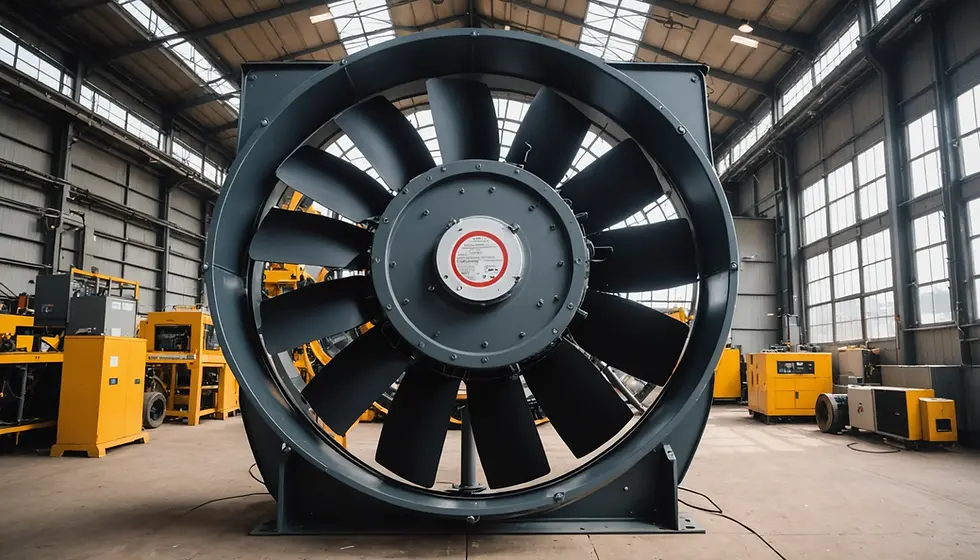
Setting up a manufacturing line for industrial fans involves many decisions that affect both initial investment and ongoing expenses. Understanding the types of fans, production capacity, manufacturing steps, and machinery needs helps estimate costs accurately. This guide breaks down these factors to provide a clear picture of what it takes to start producing industrial fans.

Understanding Different Types of Industrial Fans
Industrial fans serve various purposes, and their design and production requirements differ significantly. Knowing the type of fan you plan to manufacture is critical for cost estimation.
Radiator Fans
These fans are typically used in automotive applications to cool the radiator. They are smaller, require precise blade design for airflow efficiency, and often use plastic or lightweight metals. Production lines for radiator fans focus on high precision and moderate volume.
Engine Cooling Fans
Larger than radiator fans, engine cooling fans are designed for heavy machinery and vehicles. They require durable materials like steel or aluminum and robust assembly processes. Manufacturing these fans demands equipment capable of handling heavier components and more complex balancing.
HVAC Fans
Used in heating, ventilation, and air conditioning systems, HVAC fans vary widely in size and design. They often require corrosion-resistant materials and must meet strict noise and efficiency standards. Production lines for HVAC fans may need flexible machinery to handle different models and sizes.
Defining the product type early helps determine the machinery, materials, and labor skills required, which directly impacts costs.
Importance of Defining Product Type and Production Capacity Early
Before investing in equipment or facilities, deciding on the product type and expected production volume is essential. This decision influences:
Machinery Selection
Different fans require different cutting, assembly, and testing machines. For example, plastic molding machines suit radiator fans, while metal stamping presses are necessary for engine cooling fans.
Production Layout
The size and complexity of fans affect factory floor space and workflow design. High-volume production demands automation and efficient material handling systems.
Cost Planning
Knowing production capacity helps estimate raw material needs, labor costs, and maintenance schedules. It also guides budgeting for compliance with industry standards.
Failing to define these factors early can lead to overspending on unnecessary equipment or underestimating operating costs.
The Manufacturing Process of Industrial Fans
Producing industrial fans involves several key steps. Each step requires specific machinery and impacts the overall cost and productivity.
Material Cutting
Cutting raw materials into fan components is the first step. Depending on the fan type, materials may include metal sheets, plastic, or composites.
Machinery
Laser cutters, stamping presses, or CNC machines are common. Laser cutting offers precision but is more expensive, while stamping is faster for large volumes.
Cost Impact
Automated cutting reduces labor but increases initial investment. Manual cutting lowers upfront costs but slows production.
Blade Assembly
Blades must be assembled onto hubs or frames with accuracy to ensure balance and performance.
Machinery
Assembly lines may use robotic arms for welding or fastening, especially in high-volume settings. Manual assembly is common for smaller batches or complex designs.
Cost Impact
Automation in assembly improves consistency and speed but requires significant capital. Manual assembly lowers initial costs but increases labor expenses.
Dynamic Balancing
Balancing fan blades is crucial to reduce vibration and noise during operation.
Machinery
Dynamic balancing machines spin the assembled fan to detect imbalances and guide adjustments.
Cost Impact
Investing in balancing machines improves product quality and reduces warranty claims, justifying the cost.
Quality Testing
Final products undergo tests for airflow, noise, durability, and compliance with standards.
Machinery
Testing chambers, airflow measurement devices, and sound level meters are used.
Cost Impact
Quality testing ensures reliability and customer satisfaction but adds to operating expenses.

Machinery Requirements and the Role of Automation
Each manufacturing step requires specific equipment. Automation plays a significant role in shaping costs and productivity.
Cutting Machines
Automated laser cutters and CNC machines increase precision and speed but require higher upfront investment.
Assembly Robots
Robotic arms reduce labor costs and improve consistency, especially for repetitive tasks like welding or fastening.
Balancing and Testing Equipment
Automated balancing and testing machines ensure quality but add to capital and maintenance costs.
Automation reduces human error and increases output but demands skilled technicians for operation and maintenance. The choice between manual and automated processes depends on production volume and budget.
Breakdown of Initial Investment Versus Operating Expenses
Setting up a manufacturing line involves two main cost categories: initial investment and ongoing operating expenses.
Initial Investment
Machinery and Equipment
Costs vary widely depending on automation level and fan type. For example, a basic manual assembly line for radiator fans might cost $500,000, while a fully automated line for engine cooling fans could exceed $2 million.
Facility Setup
Includes factory space, utilities, and safety installations. Location affects costs due to real estate prices and infrastructure.
Compliance and Certification
Meeting industry standards requires investment in testing equipment and documentation.
Operating Expenses
Raw Materials
Steel, aluminum, plastics, and composites vary in price. Bulk purchasing reduces costs.
Labor
Skilled operators, technicians, and quality inspectors are needed. Automation can reduce labor hours but may increase wages for specialized staff.
Maintenance
Regular upkeep of machinery prevents downtime. Automated equipment often requires more expensive maintenance.
Utilities
Power consumption for machines and climate control adds to costs.
Compliance Costs
Ongoing testing and certification renewals are necessary to maintain product standards.
Influence of Production Volume and Local Factors
Higher production volumes spread fixed costs over more units, reducing per-unit cost. Local economic factors such as labor rates, taxes, and supply chain logistics also affect expenses.
For example, a manufacturing line in a region with low labor costs but high energy prices might balance out differently than one in an area with opposite conditions.

Final Thoughts on Cost Estimation for Industrial Fan Manufacturing
Estimating the cost of setting up an industrial fan manufacturing line requires careful consideration of fan types, production capacity, manufacturing steps, machinery, and local factors. Early decisions about product type and volume shape the entire investment and operating cost structure.




Comments