
The Ultimate Guide to Vibrating Screens in Mining: Types, Performance, Selection and Maintenance Tips
Presented by Amindus Consulting and Solutions
Mining operations rely heavily on efficient material processing to maximize output and reduce costs. Vibrating screens play a crucial role in separating and sizing mined materials, ensuring that the downstream processes receive the right feed. Understanding the different types of vibrating screens, how their performance affects efficiency, and how to select and maintain them can significantly impact mining productivity.
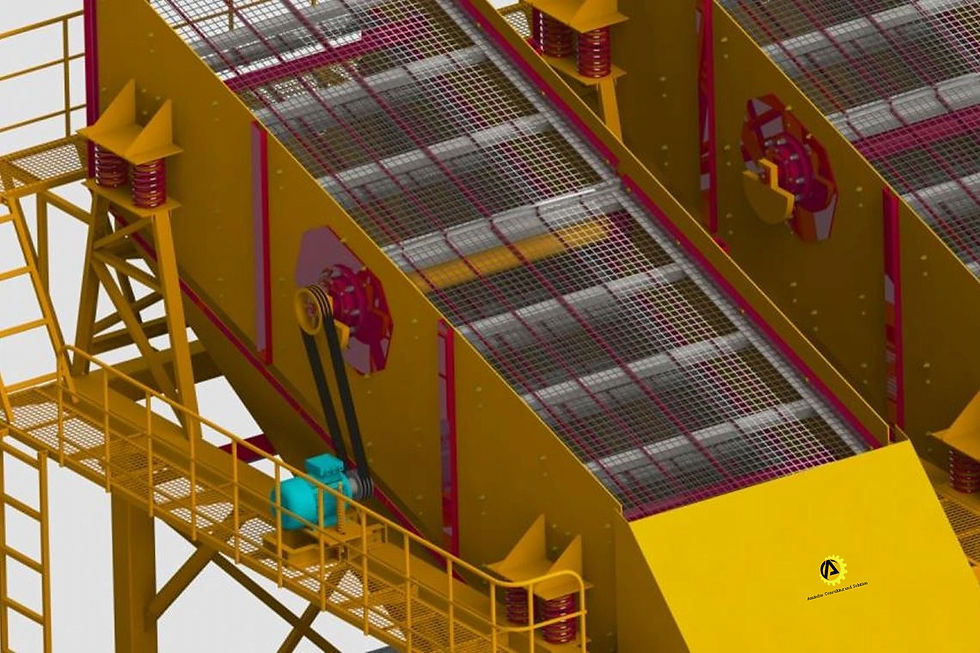
Different Types of Vibrating Screens Used in Mining
Mining operations use several types of vibrating screens, each designed to handle specific materials and processing needs. The main types include:
Circular Vibrating Screens
These screens use a circular motion to separate materials. They are common in mining because they handle a wide range of particle sizes and are effective for coarse and medium-sized materials. Circular screens are often used for primary and secondary screening.

Linear Vibrating Screens
Linear screens move materials in a straight line. They are suitable for fine and medium-sized materials and provide high screening efficiency. These screens are often used in tertiary screening or for materials that require precise sizing.
Elliptical Vibrating Screens
Combining circular and linear motions, elliptical screens offer gentle material handling and high throughput. They are ideal for fragile materials or when minimizing material degradation is important.
High-Frequency Vibrating Screens
These screens operate at higher frequencies and are used for fine particle separation. They are common in mineral processing plants where precise separation of fine particles is critical.
Banana Screens
Named for their curved shape, banana screens provide a longer screening surface in a compact footprint. They are used for high-capacity screening of fine and medium-sized materials.
Each type has unique advantages depending on the material characteristics and the stage of processing.
Performance Metrics and Their Impact on Efficiency
The efficiency of vibrating screens directly affects the throughput and quality of mined materials. Key performance metrics include:
Screening Efficiency
This measures how well the screen separates particles into the desired size fractions. Higher efficiency means less material is misclassified, reducing reprocessing and waste.
Capacity
Capacity refers to the volume of material the screen can process per hour. It depends on screen size, vibration frequency, and material properties.
Screening Accuracy
Accuracy relates to the precision of particle size separation. It is influenced by screen mesh size, vibration amplitude, and feed rate.
Durability and Wear Resistance
Screens must withstand abrasive materials and harsh conditions. Durable screens reduce downtime and maintenance costs.
For example, a mining operation processing iron ore found that switching from a circular vibrating screen to a banana screen increased capacity by 20% while maintaining high screening accuracy. This change reduced bottlenecks and improved overall plant efficiency.

Criteria for Selecting the Right Vibrating Screen for Specific Applications
Choosing the right vibrating screen depends on several factors:
Material Characteristics
Consider particle size, moisture content, abrasiveness, and stickiness. For instance, sticky materials may require screens with self-cleaning features.
Screening Stage
Primary screening often requires robust screens for coarse materials, while tertiary screening demands high-frequency screens for fine particles.
Capacity Requirements
Match the screen size and type to the expected throughput to avoid underperformance or overloading.
Space Constraints
Some mining sites have limited space, making compact screens like banana screens preferable.
Maintenance and Operating Costs
Evaluate the ease of maintenance and availability of spare parts. Screens with modular designs can reduce downtime.
Environmental Conditions
Harsh environments may require screens with corrosion-resistant materials or protective coatings.
A copper mine in Chile selected elliptical vibrating screens for their gentle handling of fragile ore, reducing material degradation and improving downstream flotation efficiency. This choice was based on detailed analysis of ore properties and processing goals.
Best Practices for Maintenance to Ensure Longevity and Optimal Performance
Proper maintenance extends the life of vibrating screens and maintains their performance. Key practices include:
Regular Inspection
Check for wear on screen media, springs, and bearings. Early detection of damage prevents costly failures.
Lubrication
Follow manufacturer guidelines for lubricating bearings and moving parts to reduce friction and wear.
Tensioning Screen Media
Proper tension prevents sagging and ensures effective screening.
Cleaning
Remove material buildup regularly to avoid clogging and maintain screening efficiency.
Monitoring Vibration Levels
Use sensors to detect abnormal vibration patterns that may indicate mechanical issues.
Replacing Worn Components Promptly
Timely replacement of worn parts like screen panels and springs avoids breakdowns.
For example, a gold mining operation implemented a preventive maintenance schedule that included weekly inspections and monthly lubrication. This approach reduced unplanned downtime by 30% and extended screen life by two years.

Practical Insights and Real-World Examples
Mining companies that invest in the right vibrating screens and maintain them well see clear benefits:
Increased Throughput
Efficient screening reduces bottlenecks and improves the flow of material through the plant.
Improved Product Quality
Accurate separation ensures that downstream processes receive correctly sized material, enhancing recovery rates.
Lower Operating Costs
Durable screens and planned maintenance reduce repair costs and downtime.
Adaptability
Selecting screens suited to specific materials and conditions allows mines to handle changing ore characteristics without major equipment changes.
For instance, a coal mine in Australia upgraded to high-frequency vibrating screens to improve fine coal separation. This upgrade increased recovery rates by 15% and reduced waste, demonstrating the value of matching screen type to material properties.

Mining operations that understand the types, performance metrics, selection criteria, and maintenance needs of vibrating screens can make informed decisions that boost productivity and reduce costs. Regular evaluation of screen performance and adapting to material changes will keep mining processes running smoothly.


Comments