
How to Repair a Gear: Welding, Machining, Grinding and the Role of Heat Treatment
Presented by Amindus Consulting and Solutions
Gears are critical components in countless machines, from automotive transmissions to industrial equipment. When gears suffer damage or wear, effective repair techniques can restore their function and extend their service life. Understanding the core methods used in gear repair—welding, machining, and grinding—helps engineers and maintenance professionals choose the right approach for each situation. Equally important is the role of heat treatment after repair, which ensures gears regain their strength and durability.
This post explains these essential gear repair techniques, their advantages, and applications. It also highlights why heat treatment is a vital step to improve gear performance and longevity.

Welding as a Gear Repair Method
Welding is a common technique to restore damaged gear teeth or rebuild worn surfaces. It involves melting a filler metal into the damaged area to fill cracks, chips, or worn sections. Once cooled, the weld material bonds with the base metal, restoring the gear's shape and strength.
Advantages of Welding
Cost-effective for localized damage: Welding repairs only the damaged area, avoiding the need to replace the entire gear.
Restores gear geometry: Skilled welders can rebuild worn teeth to their original profile.
Versatile for different metals: Various filler materials allow welding on steel, cast iron, and other gear materials.
Quick turnaround: Welding repairs can often be completed faster than full gear replacement.
Applications of Welding
Repairing chipped or cracked gear teeth in automotive or industrial gears.
Rebuilding worn gear flanks in heavy machinery.
Fixing casting defects in newly manufactured gears before machining.
Welding requires careful control of heat input to avoid warping or weakening the gear. Post-weld machining and heat treatment are usually necessary to restore precise gear geometry and mechanical properties.
Machining for Gear Repair
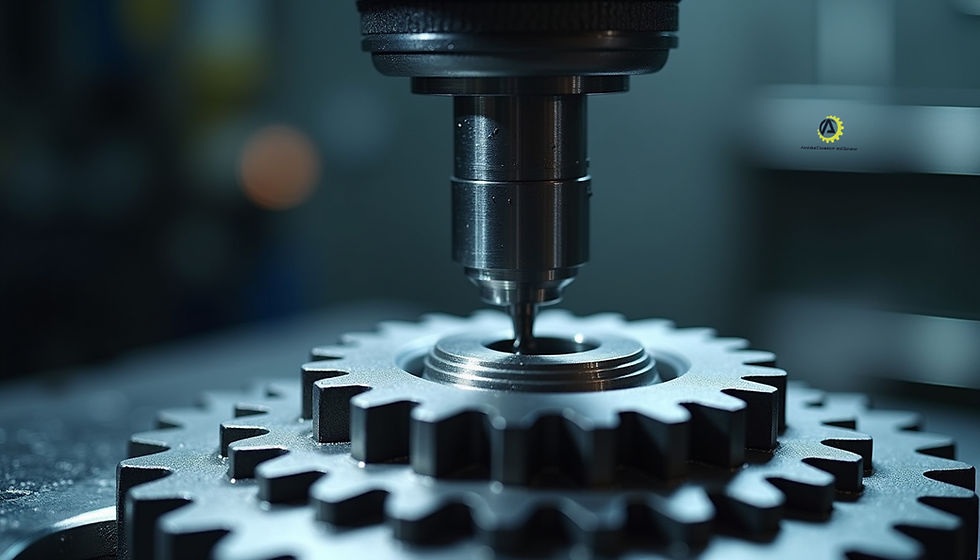
Machining involves removing material from the gear surface to restore its shape or prepare it for further repair steps. Common machining processes include milling, turning, and gear cutting.
Advantages of Machining
Precision restoration: Machining can recreate accurate gear tooth profiles and dimensions.
Surface preparation: It removes damaged or irregular surfaces before welding or grinding.
Customization: Machining allows modification of gear geometry to meet specific requirements.
Compatibility: Works on a wide range of gear materials and sizes.
Applications of Machining
Cutting new gear teeth on a damaged gear blank.
Removing cracks or surface defects before welding.
Refinishing gear surfaces after welding to restore smoothness and accuracy.
Machining requires specialized equipment and skilled operators to maintain tight tolerances. It is often combined with other repair methods to achieve optimal results.
Grinding as a Gear Repair Technique
Grinding is a finishing process that uses abrasive wheels to smooth and refine gear surfaces. It is essential for achieving the final gear tooth profile and surface finish after welding and machining.
Advantages of Grinding
High surface quality: Produces smooth, accurate gear tooth surfaces that reduce friction and noise.
Tight tolerances: Achieves precise dimensions and tooth profiles critical for gear performance.
Removes minor defects: Eliminates surface irregularities and small cracks.
Improves gear meshing: Enhances contact patterns between mating gears.
Applications of Grinding
Finishing gear teeth after welding and machining repairs.
Correcting minor surface damage or wear.
Preparing gears for high-speed or high-load applications where surface finish is critical.
Grinding requires careful control to avoid overheating or removing too much material. It is often the final step in gear repair before heat treatment.
The Importance of Heat Treatment After Gear Repair
Heat treatment is a controlled process of heating and cooling gears to alter their microstructure and mechanical properties. After welding, machining, and grinding, heat treatment restores the gear’s hardness, strength, and wear resistance.
How Heat Treatment Affects Gear Performance
Restores hardness: Welding and machining can soften gear surfaces; heat treatment re-hardens them to original specifications.
Relieves residual stresses: Welding and grinding induce stresses that can cause distortion or cracking; heat treatment reduces these stresses.
Improves wear resistance: Proper heat treatment increases surface durability, extending gear life.
Enhances toughness: Heat treatment balances hardness with toughness to prevent brittle failure.
Common Heat Treatment Processes for Gears
Quenching and tempering: Rapid cooling followed by reheating to achieve desired hardness and toughness.
Case hardening: Hardening only the gear surface while keeping the core softer for shock resistance.
Stress relieving: Heating at moderate temperatures to reduce internal stresses without changing hardness.
Skipping heat treatment after repair can lead to premature gear failure due to soft surfaces or residual stresses. Proper heat treatment ensures the repaired gear performs reliably under load.

Summary of Gear Repair Techniques and Heat Treatment
Effective gear repair combines welding, machining, and grinding to restore damaged gears. Welding rebuilds damaged areas, machining restores precise geometry, and grinding finishes surfaces to tight tolerances. Heat treatment after these steps is essential to restore hardness, relieve stresses, and improve wear resistance.
Choosing the right repair method depends on the type and extent of gear damage, material, and application requirements. Properly executed gear repair and heat treatment can extend gear life, reduce downtime, and save costs compared to full gear replacement.
For anyone involved in mechanical maintenance or engineering, mastering these gear repair techniques and understanding heat treatment effects is key to maintaining reliable gear systems. Regular inspection and timely repair using these methods will keep gears running smoothly and efficiently for years.


Comments