
How to Operate a Skid Steer (Bobcat)
Presented by Amindus Consulting and Solutions
Operating a skid steer, often called a Bobcat, can transform how you handle landscaping, construction, or farming tasks. These compact machines pack a punch with their versatility and power, but for beginners, the controls and safe operation might seem intimidating. This guide breaks down the key controls, explains how to use various attachments, and offers step-by-step instructions to help you operate a skid steer confidently and safely.
Understanding Skid Steer Controls
Before you start the engine, it’s crucial to understand the main controls of a skid steer. While models vary slightly, most share similar control layouts.
Steering Mechanisms
Skid steers use a unique steering system that differs from traditional vehicles:
Dual Joystick Steering: Most modern skid steers have two joysticks, one for each side of the machine.
- Left Joystick controls the left wheels or tracks.
- Right Joystick controls the right wheels or tracks.
Pushing both joysticks forward moves the machine straight ahead. Pulling both back reverses it. To turn, push one joystick forward while pulling the other back. This causes the machine to skid or pivot on the spot, allowing tight turns in confined spaces.
Foot Pedal Steering: Some older or alternative models use foot pedals to steer, where pressing the left pedal turns left and the right pedal turns right.
Lift Functions
The lift system controls the bucket or attachment height and tilt:
Lift Lever or Joystick: Pushing the lever or joystick forward lowers the lift arms, and pulling it back raises them.
Tilt Control: Moving the control left or right tilts the bucket or attachment forward or backward.
Understanding these controls is essential for precise operation, especially when loading, digging, or grading.
Key Controls Summary
| Control | Function
Left Joystick | Controls left wheels/tracks
Right Joystick | Controls right wheels/tracks
Lift Lever/Joystick | Raises/lowers lift arms
Tilt Control | Tilts bucket/attachment forward or backward
Auxiliary Controls| Operate attachments (hydraulic)
Common Attachments and Their Uses
Skid steers become powerful tools thanks to their wide range of attachments. Here are some popular ones and how they are used:
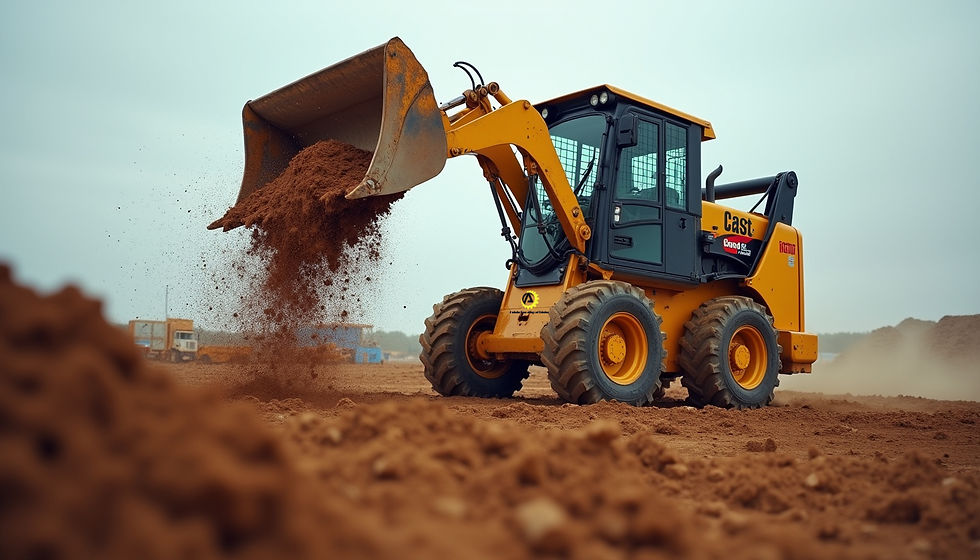
Bucket: The most common attachment, used for digging, lifting, and moving materials like dirt, gravel, or snow.
Pallet Forks: Ideal for lifting and transporting pallets, lumber, or large objects.
Auger: Used for drilling holes in the ground, perfect for fence posts or planting trees.
Grapple: Helps grab and move bulky materials like logs, brush, or debris.
Hydraulic Breaker: Breaks concrete or rock in demolition work.
Snow Blower: Clears snow efficiently from driveways or roads.
Each attachment connects via a quick-attach system and often requires auxiliary hydraulic controls to operate.
Step-by-Step Instructions for Safe Skid Steer Operation
Operating a skid steer safely requires preparation and attention to detail. Follow these steps to get started:
1. Pre-Operation Inspection
Check fluid levels: engine oil, hydraulic fluid, coolant, and fuel.
Inspect tires or tracks for damage or wear.
Ensure all controls move smoothly and respond correctly.
Verify that attachments are securely fastened.
Look for leaks or loose parts.
2. Mounting the Skid Steer
Use the handholds and steps to climb in safely.
Fasten the seatbelt.
Adjust the seat and controls for comfort and reach.
3. Starting the Machine
Insert the key and turn to start.
Allow the engine to warm up for a few minutes.
Check the gauges for any warning lights.
4. Operating Controls
Use the joysticks to move forward, backward, and steer.
Practice lifting and lowering the lift arms slowly.
Tilt the bucket or attachment to get a feel for the controls.
Avoid sudden movements to maintain stability.
5. Using Attachments
Engage auxiliary hydraulic controls for attachments.
Practice operating the attachment in a safe, open area.
Follow manufacturer instructions for each attachment.
6. Moving Safely
Always look in the direction of travel.
Keep the bucket or attachment low when moving to maintain stability.
Avoid steep slopes or uneven terrain.
Be aware of surroundings, including people and obstacles.
7. Parking and Shutdown
Lower the lift arms and attachments to the ground.
Set the parking brake.
Turn off the engine and remove the key.
Exit the machine carefully.
Tips for Beginners to Build Confidence and Improve Skills
Starting with a skid steer can feel overwhelming. These tips help new operators gain confidence and improve quickly:
Start Slow: Practice in an open, flat area without attachments to get used to steering and controls.
Use Small Movements: Make gentle joystick movements to avoid jerky motions.
Watch Tutorials: Video demonstrations can clarify control functions and techniques.
Ask for Guidance: If possible, learn from an experienced operator.
Practice Attachment Use: Attach and detach tools to become familiar with the process.
Stay Calm: Mistakes happen; focus on learning and improving.
Wear Safety Gear: Always use a hard hat, gloves, and eye protection.
Keep a Maintenance Log: Regular checks prevent breakdowns and keep the machine safe.
Final Thoughts on Operating a Skid Steer
Mastering a skid steer opens up many possibilities for handling tough jobs efficiently. Understanding the steering, lift functions, and attachments lays the foundation for safe and effective operation. By following the step-by-step instructions and practicing regularly, beginners can build confidence and skill quickly.


Comments