
Estimated Cost of Setting Up a Matchstick Manufacturing Process
Updated: Jan 1
Presented by Amindus Consulting and Solutions
Starting a matchstick manufacturing business can be a promising venture, especially in regions where demand for affordable fire-starting tools remains steady. However, understanding the costs involved is crucial before investing. This post breaks down the essential equipment, investment costs, production capacity, and budgeting tips to help new entrepreneurs make informed decisions.
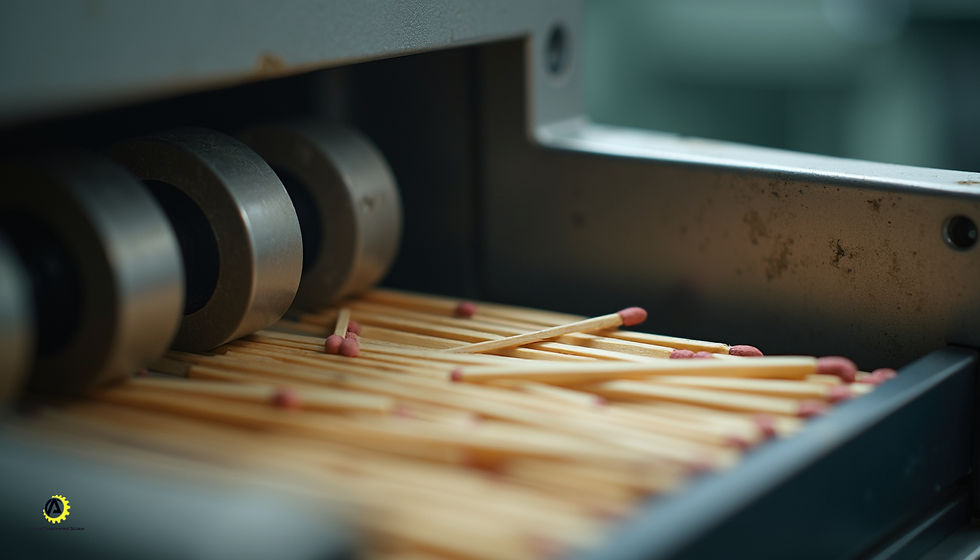
Essential Equipment Needed for Matchstick Production
Setting up a matchstick manufacturing unit requires several key machines and tools. Each plays a vital role in ensuring the production process runs smoothly and efficiently.
Wood Cutting Machine
This machine cuts wooden logs into thin sticks of uniform size. Precision here affects the quality of the final product.
Drying Kiln or Chamber
After cutting, the wooden sticks must be dried to reduce moisture content. Proper drying prevents warping and ensures better ignition.
Matchstick Making Machine
This is the core equipment that assembles the sticks, applies the chemical coating on the match heads, and packages the matches. Machines vary in automation levels, from semi-automatic to fully automatic.
Chemical Mixing and Dipping Tanks
These tanks prepare and apply the chemical compounds that make the match heads combustible. Safety measures are essential when handling chemicals.
Packaging Machine
Packaging machines wrap the finished matchsticks into boxes or matchbooks, ready for sale.
Quality Control Tools
Basic tools like moisture meters, chemical testers, and visual inspection setups help maintain product standards.
Investing in reliable machinery reduces downtime and improves output quality, which is critical for market acceptance.
Breakdown of Investment Costs
Understanding the financial commitment helps entrepreneurs plan better and avoid surprises. The main cost categories include machinery, raw materials, labor, and overheads.
Machinery Costs
Wood Cutting Machine: $5,000 to $10,000
Drying Kiln: $3,000 to $7,000
Matchstick Making Machine: $15,000 to $50,000 depending on automation and capacity
Chemical Tanks and Safety Equipment: $2,000 to $5,000
Packaging Machine: $5,000 to $12,000
Total machinery investment can range from $30,000 to $80,000 depending on scale and technology.
Raw Materials
Wood (typically poplar or aspen): Cost varies by region, approximately $200 to $500 per ton
Chemicals (phosphorus, potassium chlorate, glue): Around $1,000 to $3,000 for initial stock
Packaging Materials (cardboard, paper): $500 to $1,500
Initial raw material costs usually fall between $2,000 and $5,000 for a small to medium operation.
Labor Costs
Labor depends on location and scale. A small unit may require:
3 to 5 workers for machine operation, quality control, and packaging
Monthly wages ranging from $300 to $800 per worker in third world country
Estimated monthly labor cost: $1,000 to $4,000 in third world country.
Other Expenses
Factory rent or purchase
Utilities (electricity, water)
Maintenance and repairs
Licensing and permits
These can add another $1,000 to $3,000 monthly depending on location.
Insights on Production Capacity and Efficiency
Production capacity depends heavily on the machinery used and the workforce efficiency.
Small-scale units with semi-automatic machines can produce around 50,000 to 100,000 matchboxes per day.
Medium to large-scale units with fully automatic machines can reach 200,000 to 500,000 matchboxes daily.
Efficiency improves with automation, reducing labor costs and minimizing errors. However, higher automation requires larger upfront investment.
For example, a fully automatic machine costing $50,000 might produce 300,000 matchboxes daily with a labor team of 5, while a semi-automatic setup costing $20,000 might produce 80,000 matchboxes with 8 workers.
Balancing production capacity with market demand is key to avoid overproduction and inventory costs.

Tips for Budgeting and Financial Planning for New Manufacturers
Starting a matchstick manufacturing business requires careful financial planning to ensure sustainability and growth.
Start Small and Scale Gradually
Begin with semi-automatic machines and a small workforce. As demand grows, reinvest profits to upgrade machinery.
Plan for Raw Material Fluctuations
Wood and chemical prices can vary seasonally. Maintain a buffer stock and negotiate with multiple suppliers.
Include Safety and Compliance Costs
Handling chemicals requires safety gear, training, and compliance with local regulations. Budget for these to avoid legal issues.
Monitor Production Efficiency
Track output versus input regularly. Identify bottlenecks and invest in training or equipment upgrades accordingly.
Consider Location Costs
Rent and utilities vary widely. Choose a location balancing cost with access to raw materials and markets.
Build a Contingency Fund
Allocate at least 10-15% of your budget for unexpected expenses like machine repairs or supply delays.
Explore Financing Options
Look into government subsidies, small business loans, or partnerships to ease initial capital requirements.

Setting up a matchstick manufacturing process involves a clear understanding of equipment needs, investment costs, and production capabilities. Entrepreneurs should focus on balancing quality, capacity, and cost to build a sustainable business. Starting with manageable investments and scaling based on market response reduces financial risk. Careful budgeting, supplier management, and safety compliance will support long-term success in this traditional yet steady industry.



Comments